
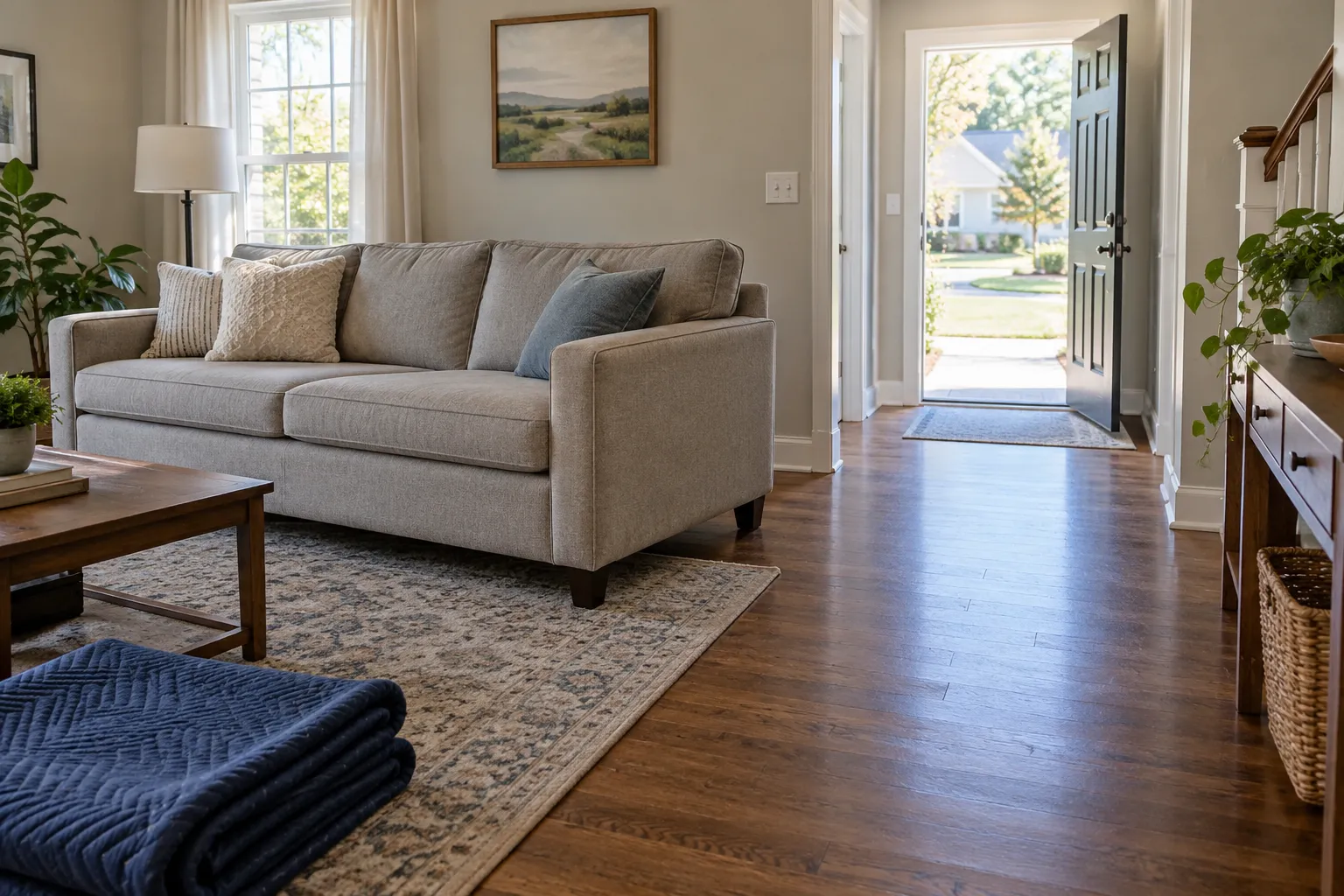
The best preparation is not dragging every piece to the curb. It is making the decision clear and the route safe. Mark what goes, protect what stays, and tell the crew about stairs, tight turns, weak flooring, glass, reclining mechanisms, or anything unusually heavy.
Separate the decision from the lifting
Before anyone moves a chair, decide which pieces are leaving. Put a removable note on each item or group the removal pieces in one part of the room. If two similar bookcases sit side by side and only one goes, do not rely on memory during a busy pickup.
Empty drawers, cabinets, and storage ottomans. Check behind cushions and under liners. Remove documents, medication, keys, jewelry, remotes, and anything with account or identity information. If a piece may be donated or sold instead, make that choice before the crew starts loading.
Walk the route from the item to the truck
Start at the furniture and walk every turn to the exterior door. Measure the narrow points if the fit looks close. Open the door fully and check whether the handle, storm door, railing, or light fixture reduces the usable opening. Outside, look for loose rugs, toys, hoses, low branches, ice, mud, and parked cars.
Do not try to prove that you can lift an awkward item. OSHA identifies heavy lifting, pushing, pulling, bending, reaching, and awkward postures as ergonomic risk factors. That guidance is written for workplaces, but it explains why a clear route and accurate item description matter for any removal plan. OSHA ergonomics overview (retrieved October 8, 2026; United States).
Furniture pickup checklist
- Mark every item that goes and every similar item that stays.
- Empty drawers, shelves, storage compartments, and pockets.
- Remove loose glass shelves, mirrors, cords, and detachable parts only if you can do so safely.
- Measure the item and the narrowest doorway, stair turn, gate, or elevator opening when clearance is uncertain.
- Move pets and children away from the route before the crew arrives.
- Tell the crew about bed bugs, broken glass, exposed staples, water damage, mold concerns, or structural weakness.
- Reserve elevators, loading zones, or building time windows when required.
- Photograph pre-existing wall or floor damage near a difficult route.
Questions to ask the removal provider
| Ask | Why it matters |
|---|---|
| Is labor included in the quote? | It separates a complete removal price from a transport-only price. |
| Does this item have a special fee? | Mattresses, bed bug items, monitors, tires, and unusually heavy material may be handled differently. |
| Who disconnects built-in or powered furniture? | Some items need a qualified trade or owner preparation before the hauling crew can move them. |
| What happens if the item cannot use the planned route? | The provider can discuss alternate access before the crew is committed to a narrow path. |
What not to do
Do not dismantle a piece when you do not understand its springs, gas cylinders, wiring, wall attachment, or weight distribution. Do not conceal pest exposure, sharp damage, or wet material. Do not stack smaller items on the furniture if that makes the load unstable. A complete description is more useful than a room that looks tidy in a photo.
For help with the actual load, read about furniture removal or call 615-840-2383 with the item list and access notes.